Event Details
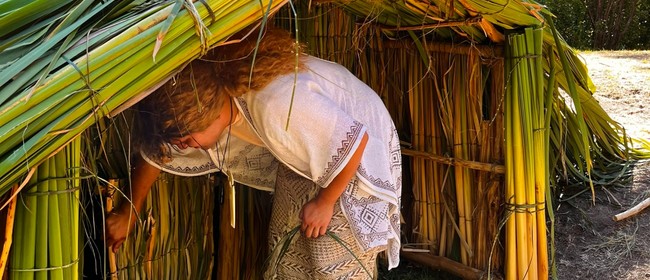
Join artist and Māori weaving specialist Arapeta Hakura to learn how fibres from harakeke are braided to create strong rope used for lashing and binding. Arapeta guided the process of making a whare raupō for the exhibition Currents Calling Home.
Arapeta Hākura is an Irāwhiti (Transgender Māori) artist, curator, and academic based in Whangateau and Tāmaki Makaurau, Aotearoa, New Zealand. They descend from a rich whakapapa including Te Rarawa, Ngāti Kahu, Te Patu Koraha, Tainui, Ngāti Mahuta, Ngāti Marutūāhu, Ngāti Whanaunga, Ngai Te Rangi, Ngai Tohianga, Ngāti Whakamarurangi, Ngāti Tuirirangi, Ngāti Koata, Ngāti Te Wehi, Ngāti Whangaparāoa, Ngāti Tahinga, Ngāti Motemote, Ngāti Ruanui, Ngāti Porou, Scottish, and Croatian heritage. This diverse lineage informs their teaching philosophy, which emphasises inclusivity, cultural responsiveness, and the integration of indigenous knowledge systems within contemporary art education. Outside of the academic field, Hākura is a kaiako engaging with iwi and hapū restorative practices, and is nationally recognised as both a curator and artist in Aotearoa.
Arapeta is a weaver of stories with a particular focus on Irāwhiti transgender Māori lived experiences, using the poetics of adornment, objects, performance, sound art, photography, and cinema. Their practice draws upon traditional and contemporary art forms passed down through whakapapa, challenging binaries of Western and precolonial Māori gendered making as well as material practices. This approach translates into their pedagogy, where students are encouraged to critically engage with both customary and experimental methodologies, fostering a learning environment that values innovation alongside cultural continuity.
Through their PhD scholarship, Whare Wawata: Dream Walking through takatāpui storytelling and sovereignty in transdisciplinary contemporary art, Arapeta grounds their academic work in pioneering indigenous transgender theory. This research not only advances scholarship but also informs their teaching, offering students frameworks for decolonial thinking and creative sovereignty. Their methodology of Whare Wawata—prophetic dreaming in Te Ao Māori—becomes a pedagogical tool for imagining new futures in art education.
Arapeta has exhibited widely across Aotearoa and internationally, often challenging Western imperialism in contemporary art spaces. Their exhibitions are site and kaupapa-specific, focusing on community engagement as a primary driver for creative practice. This experience enriches their lecturing, enabling them to teach students how to situate art within cultural, social, and political contexts. Exhibitions such as Home Sweet Home (2022, RM Gallery), Bunnies Blue Moon (2024, Govett Brewster Gallery), and Cowboy Motel (2025, Dowse Art Museum) exemplify their ability to merge theory and practice—a skill they impart to students through project-based learning.
Alongside contemporary materialities, Arapeta specialises in Māori practices including Pao Kōwhatu (customary stone adze making), Whatu kākāhu (customary garment weaving), Tapa Māori (bark cloth practices), and Uku Whenu (customary clay making). Their expertise in these areas positions them as knowledge holder within both academic and community contexts. In the classroom, this translates into hands-on learning experiences that connect students to indigenous material practices while encouraging critical reflection on their evolution in contemporary art.